
A practical 2026 guide to choosing fewer platforms, reaching the right audience, and building a social strategy your team can actually sustain
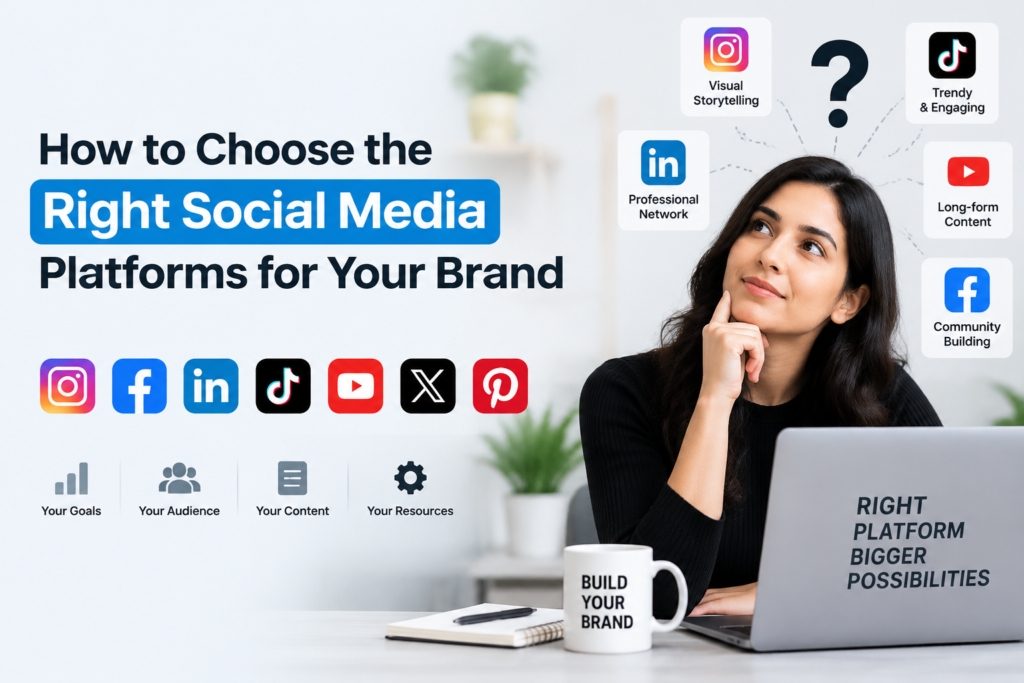
A new business launches and immediately creates accounts on Facebook, Instagram, TikTok, LinkedIn, YouTube, Pinterest, X, and Threads. For the first two weeks, the team posts enthusiastically. By month two, some profiles have not been updated, the same graphic is copied everywhere, messages are missed, and nobody can explain which platform is actually generating customers.
That situation is common because brands often choose social media platforms by popularity rather than by purpose. They ask, “Which platform has the most users?” when the better question is, “Where does our audience pay attention, what do they do there, and can we create content that fits that behaviour consistently?”
The scale of social media is enormous. DataReportal’s Digital 2026 Mid-Year Global Update reports about 5.79 billion active social media user identities worldwide, equal to roughly 69.9% of the global population. Yet people do not use every platform for the same reason, and the biggest platform is not automatically the best platform for every brand. View the Digital 2026 Mid-Year Global Update
The goal, therefore, is not maximum presence. It is strategic presence. A brand that performs exceptionally on two well-chosen platforms can generate more awareness, trust, leads, and sales than a brand that performs poorly on seven.
If you want a simple rule, use this: choose the smallest combination of platforms that gives you meaningful access to your target audience and supports the type of content your business can produce well. Then build depth before adding more channels.
DataReportal notes that online adults use several social platforms in a typical month, but its 2026 analysis also argues that a presence on two or three leading platforms can already give brands the opportunity to reach the vast majority of social media users. That is important because every additional platform creates more work: more content formats, more comments, more analytics, more creative variations, more community management, and more opportunities for inconsistency.
For many businesses, the right starting point is one primary platform where the brand invests most of its effort, plus one or two supporting platforms that serve different roles. A B2B consultancy might make LinkedIn its primary channel and use YouTube for educational depth. A restaurant might prioritize Instagram and Facebook. A home-decor e-commerce brand might focus on Instagram and Pinterest. A training company could combine YouTube for evergreen education with LinkedIn for professional lead generation.
Social media selection should begin with the business, not with the app icons. Before creating a content calendar, answer six questions clearly.
These questions prevent a common mistake: choosing a platform because it is trending while ignoring whether the brand has the audience, content, or operational capacity to succeed there.
There is no universal “best social media platform.” Each channel has a different user culture, content rhythm, discovery mechanism, and business strength. The right platform is the one whose strengths match your brand’s goals.
Facebook remains highly relevant for businesses that serve broad consumer audiences, local communities, families, and established age groups. It can support business pages, groups, events, local discovery, customer conversations, paid campaigns, and remarketing. For local service businesses such as clinics, restaurants, home services, education providers, and community-based organizations, Facebook can still be a practical foundation.
The platform is especially useful when your marketing depends on community interaction, location-based awareness, customer testimonials, event promotion, or a mix of organic and paid content. Facebook also integrates closely with Instagram through Meta’s advertising ecosystem, which can make cross-platform campaign management more efficient.
For brands using short-form video, Meta’s own business guidance positions Reels across Facebook and Instagram as a mobile-first advertising format and recommends testing creative and placements. Meta for Business: Reels Ads
Instagram is often a strong fit for brands where visual identity influences buying decisions. Fashion, beauty, food, travel, fitness, hospitality, interior design, personal brands, creative services, and e-commerce companies can use photography, carousels, Stories, Reels, creator collaborations, and direct messages to move audiences from discovery to trust and action.
Instagram is not only a “pretty pictures” platform. Strong educational carousels, short demonstrations, behind-the-scenes content, customer stories, founder-led video, and social proof can work well for service businesses too. The key question is whether your brand can communicate value visually and consistently. If your team has no capacity for creative production, choosing Instagram simply because competitors use it may create a weak account rather than a strong channel.
LinkedIn is usually the clearest first choice for B2B companies, consultants, professional services, enterprise technology, recruitment, education, corporate training, and brands selling to decision-makers inside organizations. The audience arrives with a professional mindset, so expertise, case studies, industry commentary, founder perspectives, research, hiring content, and practical problem-solving posts can perform better than lifestyle-style content.
LinkedIn’s own B2B marketing guidance emphasizes the platform’s role in reaching professional decision-makers and notes that B2B buying often involves multiple stakeholders rather than a single consumer. LinkedIn Marketing Solutions: B2B Marketing
A common mistake is treating LinkedIn like a corporate noticeboard. People are more likely to engage with useful opinions, clear lessons, strong case studies, and human expertise than with endless “we are delighted to announce” posts. For high-value services, the credibility created by one thoughtful founder post may be more valuable than thousands of low-intent impressions elsewhere.
TikTok can be powerful when the product, brand personality, or expertise can be translated into short, native-feeling video. It often rewards creativity, speed, personality, trends, demonstrations, reactions, stories, and content that earns attention quickly. It can suit beauty, fashion, food, consumer products, entertainment, apps, education, fitness, lifestyle businesses, and founder-led brands.
The platform should not be selected only because it is associated with younger audiences. The more important question is whether your team can create entertaining or useful short-form video at the speed and style the platform expects. DataReportal’s 2026 analysis highlights meaningful differences in why people use individual platforms; for example, entertainment is a particularly important motivation for TikTok use. That means a polished corporate video copied from another channel may not perform like native TikTok content.
YouTube deserves special attention because it can support both long-form video and Shorts. A well-made video can educate prospects, answer objections, demonstrate software, compare products, show before-and-after results, explain a process, tell a customer story, or build a founder’s authority. In many categories, video can remain discoverable for months or years rather than disappearing from attention after a day.
YouTube is particularly valuable when customers need to understand before they buy. Software, education, financial services, equipment, professional services, complex products, DIY categories, health and fitness education, and high-consideration purchases can benefit from searchable video content.
Google Ads supports YouTube video campaigns for goals including awareness, website traffic, leads, and sales, with targeting by topics, keywords, demographics, and other signals. Google Ads Help: About Video Campaigns
Pinterest is easy to overlook, but it can be an excellent channel for brands connected to planning, inspiration, lifestyle decisions, and visual products. Home decor, weddings, fashion, beauty, recipes, crafts, travel, design, events, parenting, and e-commerce categories often align naturally with how people use the platform.
Pinterest describes its audience as people who save, plan, and shop, and its business site reports 631 million monthly active users. It also says Gen Z is its fastest-growing audience and that many searches are unbranded, which can create discovery opportunities for businesses that are not already household names. Pinterest Business: Audience Insights
Pinterest content can also have a longer discovery life than a typical social feed post. If your products or ideas are visually searchable and linked to future planning, Pinterest may deserve more attention than a platform with a larger general audience but weaker buyer intent for your category.
Real-time conversation platforms can make sense for brands whose customers follow news, technology, finance, media, public events, professional commentary, or fast-moving industry discussion. They can also help founders and experts develop a distinct voice. However, they are usually a weaker default choice for businesses that do not have a reason to participate in frequent conversation. Treat them as strategic channels, not mandatory ones.
Platform | Often strongest for | Content that fits | Watch out for |
Local reach, communities, broad B2C, events, retargeting | Posts, Reels, testimonials, offers, groups, events | Organic reach alone may be inconsistent; community management matters | |
Visual brands, lifestyle, e-commerce, creators, brand identity | Reels, carousels, Stories, product visuals, UGC | Requires consistent creative quality and visual rhythm | |
B2B, consulting, professional services, recruitment | Expert posts, case studies, thought leadership, documents, video | Generic corporate updates rarely build strong authority | |
TikTok | Short-video discovery, culture, entertainment, consumer brands | Native short video, demos, stories, trends, creator content | Needs fast creative testing and platform-native execution |
YouTube | Education, trust, demos, complex buying decisions | Long-form video, Shorts, tutorials, reviews, webinars | Production can take more time; consistency and retention matter |
Planning, inspiration, shopping, visual discovery | Pins, product imagery, guides, collections, idea-led visuals | Best for categories that naturally fit planning and visual search | |
X / Threads | Real-time commentary, media, tech, topical conversation | Short insights, reactions, live commentary, links | High posting frequency may be needed; not ideal for every industry |
Audience demographics matter, but they are only half of the decision. You also need to consider where the customer is in the buying journey when they use a platform.
At the top of the funnel, short video, entertaining content, creator partnerships, and visual discovery can introduce people to a brand they were not actively searching for. In the middle of the funnel, educational posts, comparison content, customer stories, live sessions, and longer videos can build trust. Near the bottom of the funnel, retargeting, product demonstrations, testimonials, direct messages, lead forms, offers, and clear calls to action can help turn attention into enquiries or sales.
The same platform can operate at more than one stage, but not every business needs every stage on every platform. A B2B software company may use LinkedIn to create awareness and credibility, then move prospects to webinars, email, demos, and sales calls. A skincare brand may use TikTok or Instagram for discovery, creator content for proof, and retargeting ads for conversion. Platform selection should support the buying journey instead of existing separately from it.
A platform may be perfect for your audience and still be the wrong choice if your team cannot produce the required content consistently. This is one of the most overlooked parts of social strategy.
Ask what your organization can create every week without exhausting the team. Do you have someone comfortable on camera? Can you produce product photography? Do you have experts who can write strong opinions? Can customer stories be approved quickly? Do you have designers? Can you edit vertical video? Is there a legal or compliance review process that slows publishing?
Your answers should influence platform choice. A founder who speaks confidently on camera may build YouTube and LinkedIn efficiently. A design-led consumer brand may have an advantage on Instagram and Pinterest. A small local service business with limited creative capacity may be better served by Facebook, Instagram, reviews, and paid local campaigns than by forcing daily TikTok production.
Consistency beats theoretical opportunity. The best platform is not the one you could succeed on if you had unlimited resources. It is the one where you can repeatedly publish content that customers value.
A brand can choose the right platform and still use it badly if it treats organic content and advertising as the same thing. Organic social is primarily about audience relationship, brand voice, community, trust, and content discovery. Paid social is about buying targeted distribution and optimizing toward campaign outcomes.
The two should support each other. Organic content helps you learn which messages, hooks, formats, and customer questions naturally attract attention. Paid campaigns can then scale strong ideas to larger or more precise audiences. Paid data can also reveal which audiences and offers are most responsive, informing future organic content.
For example, a local fitness studio might use Instagram organically for member stories, trainer tips, and behind-the-scenes Reels while running paid Meta campaigns for free-trial leads. A B2B consultancy might publish expert LinkedIn posts organically and use paid campaigns to promote a webinar to specific job titles. A retail brand might use Pinterest organic Pins for evergreen discovery and paid campaigns for product consideration or sales.
Primary: LinkedIn. Supporting: YouTube. The consultancy sells a high-value service to business decision-makers, so credibility and education matter more than entertainment volume. LinkedIn can carry expert posts, case studies, founder insights, and event promotion. YouTube can host demonstrations, webinars, implementation explainers, and longer customer stories. Instagram may exist for employer brand or culture, but it does not need equal investment.
Primary: Instagram. Supporting: Facebook. The restaurant’s strongest assets are visual: food, atmosphere, staff, customer reactions, menu launches, and events. Instagram supports visual discovery, Reels, Stories, and local creators. Facebook can support local community reach, events, updates, and broader age groups. TikTok may be added later if the team can consistently create short, personality-led video.
Primary: Instagram and Pinterest. Supporting: YouTube or TikTok depending on creative capacity. Instagram helps the brand show products in real spaces, collaborate with creators, and build lifestyle identity. Pinterest aligns with planning, inspiration, and visual search. Short or long video can later add room makeovers, styling tips, product demonstrations, and customer transformations.
Primary: LinkedIn. Supporting: YouTube or Facebook depending on audience. The firm sells trust, expertise, and judgement. Educational posts, regulatory updates, FAQs, case-based lessons, and expert video can support credibility. Chasing viral entertainment content is usually less important than becoming consistently useful to the right decision-makers.
Primary: YouTube. Supporting: LinkedIn, Instagram, or TikTok depending on audience. Education is naturally suited to video. Free tutorials can demonstrate teaching quality, searchable long-form content can build trust, Shorts can generate discovery, and a secondary platform can distribute clips and direct people toward webinars, lead magnets, or course pages.
When several platforms appear suitable, score them. A simple framework makes the decision more objective and helps prevent senior preference from becoming the entire strategy.
Factor | Weight | Question to ask |
Audience fit | 30% | How concentrated is our target audience here, and are they active for relevant reasons? |
Business-goal fit | 20% | Can this platform realistically support awareness, leads, sales, recruitment, or support? |
Content fit | 15% | Can our strongest content formats perform naturally here? |
Buying-journey fit | 15% | Does the platform influence customers at an important stage of the decision? |
Team capacity | 10% | Can we publish, respond, and optimize consistently? |
Measurement and paid options | 10% | Can we track meaningful outcomes and scale strong campaigns? |
Give each platform a score from 1 to 5 for every factor, multiply by the weighting, and compare totals. The score is not a substitute for judgement, but it forces the team to discuss the factors that actually matter.
Social platforms increasingly function as discovery engines. People search for restaurants, products, tutorials, travel ideas, reviews, career advice, software recommendations, and how-to answers inside social apps. At the same time, AI is changing how content is created, summarized, recommended, and measured.
This makes platform selection more closely connected to content quality. A strong social post should not exist only to “feed the algorithm.” It should answer a question, demonstrate expertise, show proof, entertain a relevant audience, or help someone make a decision. Clear captions, spoken keywords in video, useful titles, descriptive text, strong hooks, and organized content themes can make a brand easier to discover and understand.
AI tools can help teams repurpose a webinar into clips, draft captions, generate creative variations, organize content ideas, analyze comments, and speed up reporting. But automation does not remove the need for brand judgement. If every platform receives generic AI-generated posts with no original point of view, the brand may become more active while becoming less memorable.
Instead of launching five platforms at once, test a focused mix for 90 days. This gives enough time to establish a publishing rhythm, learn which themes work, and compare meaningful metrics.
Period | Main focus | What to do |
Days 1-30 | Foundation | Define audience, goals, content pillars, profiles, tracking, publishing cadence, and baseline metrics. |
Days 31-60 | Creative testing | Test hooks, formats, posting times, calls to action, topics, and organic vs paid amplification. |
Days 61-90 | Optimization | Double down on high-performing themes, improve weak formats, compare lead quality, and decide whether to deepen, replace, or add a platform. |
At the end of the test, do not ask only which platform got the most views. Ask which one generated the strongest combination of reach, engagement quality, website behaviour, enquiries, sales, customer value, and content efficiency.
A platform can look successful while doing very little for the business if the wrong metric is used. Match measurement to the purpose of the channel.
Goal | Useful metrics |
Awareness | Reach, impressions, video views, frequency, branded search lift, share of voice |
Engagement / community | Meaningful comments, saves, shares, replies, DMs, repeat engagement |
Traffic | Qualified website visits, landing-page engagement, assisted conversions |
Lead generation | Leads, cost per lead, lead quality, booked calls, conversion rate |
E-commerce | Product views, add-to-cart actions, purchases, revenue, ROAS, repeat customers |
Recruitment | Qualified applications, cost per applicant, employer-brand engagement |
Thought leadership | Decision-maker reach, profile visits, invitations, mentions, inbound opportunities |
In 2026, choosing social media platforms is not a popularity contest. Facebook, Instagram, LinkedIn, TikTok, YouTube, Pinterest, and conversation-led platforms can all create business value, but they create different kinds of value for different audiences. The best choice depends on where your customers spend meaningful attention, what they expect to find there, how your brand earns trust, what content your team can sustain, and what action you want the audience to take next.
Start small. Choose one primary platform and one or two supporting channels. Build a clear content system, measure real outcomes, and improve what works before expanding. A focused brand that understands its audience will usually outperform a scattered brand trying to post everywhere.
If your business is unsure which platforms deserve its time and budget, KM Marketers can help turn audience research and business goals into a practical social media strategy. Its social media marketing and management services include campaign planning, content strategy, paid advertising, audience targeting, creative execution, and performance tracking across major platforms. The aim is not to place your brand on every network; it is to build a focused presence on the channels most likely to strengthen visibility, engagement, leads, and long-term growth.
Your Trusted Marketing Partner!
KM Marketers is a digital marketing solutions provider helping businesses grow through SEO, social media, content marketing, and paid advertising. Our focus is on delivering measurable results, building strong online visibility, and driving quality leads for clients across different industries.
Email: info@kmassignmentservices.com
kmdigitalmarketing2025@gmail.com
WhatsApp: +60 16-522 4321
Head Office: Galleria Cyberjaya, Parking lot, Jalan Teknokrat 6, Cyber 5, 63000 Cyberjaya, Selangor, Malaysia.
Hours: Mon–Sat 10:00 AM to 07:00 PM
© 2026 KM Marketers. Powered by KM Software Services Sdn. Bhd. (1308207-U). All Rights Reserved.